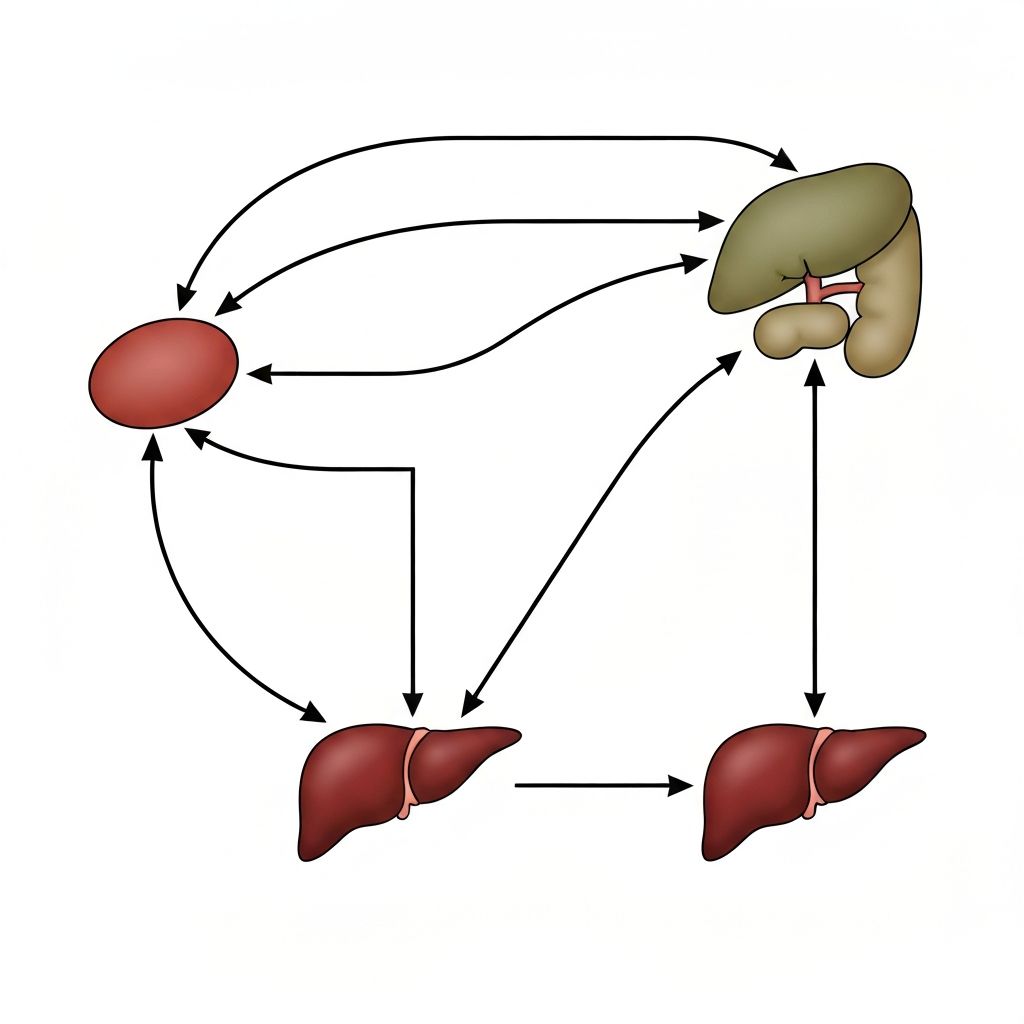
Introduction: Tissue-Specific Glucocorticoid Actions
Whilst the HPA axis and cortisol secretion originate in the central and endocrine systems, the metabolic consequences of sustained glucocorticoid elevation manifest primarily through effects on peripheral tissues. Cortisol, a lipophilic molecule, readily crosses cell membranes and can act on virtually all cell types. However, the magnitude and direction of glucocorticoid effects vary substantially across different tissues, depending on the density and sensitivity of glucocorticoid receptors, as well as tissue-specific metabolic roles.
Hepatic Metabolic Responses
The liver is a primary target organ for glucocorticoid action. Cortisol promotes several metabolic changes in hepatocytes:
- Enhanced Gluconeogenesis: Cortisol increases the expression and activity of gluconeogenic enzymes, promoting the synthesis of glucose from amino acids and glycerol. This effect increases hepatic glucose output and circulating blood glucose.
- Glycogenolysis: Cortisol promotes the breakdown of hepatic glycogen stores, further elevating blood glucose.
- Lipogenesis: Paradoxically, chronic glucocorticoid elevation can promote hepatic lipid synthesis and accumulation, particularly under conditions of high substrate availability, contributing to hepatic steatosis (fatty liver).
- Altered Lipoprotein Metabolism: Glucocorticoids influence the synthesis and clearance of lipoproteins, contributing to dyslipidaemia observed in chronic stress conditions.
Adipose Tissue Responses
Adipose tissue exhibits complex responses to glucocorticoids, with important differences between subcutaneous (under the skin) and visceral (intra-abdominal) adipose depots.
Visceral Adiposity Accumulation
Glucocorticoids preferentially promote the accumulation and expansion of visceral adipose tissue through several mechanisms:
- Higher density of glucocorticoid receptors in visceral adipose tissue compared to subcutaneous depot
- Enhanced differentiation of preadipocytes into mature adipocytes in visceral adipose tissue
- Reduced lipolysis (fat breakdown) in visceral adipose tissue under chronic glucocorticoid elevation
- Increased lipid uptake and storage through enhanced lipoprotein lipase activity
Visceral fat accumulation is particularly problematic metabolically because visceral adipose tissue is more metabolically active and lipolytically active than subcutaneous fat, promoting increased free fatty acid release into the portal circulation, which can impair hepatic glucose homeostasis and promote insulin resistance.
Acute vs Chronic Lipolysis
Acutely, glucocorticoids enhance lipolysis (fat mobilisation) in adipose tissue, contributing to the immediate energy mobilisation during acute stress. However, chronically elevated cortisol shows a more complex pattern: initial lipolytic effects may be followed by reduced lipolysis and preferential lipid accumulation, particularly in visceral depots.
Skeletal Muscle Responses
Glucocorticoids have pronounced catabolic effects on skeletal muscle:
- Protein Breakdown: Glucocorticoids enhance muscle proteolysis, particularly of myofibrillar proteins. The amino acids released are transported to the liver for gluconeogenesis.
- Reduced Protein Synthesis: Glucocorticoids suppress the anabolic processes driving muscle protein synthesis.
- Impaired Glucose Uptake: Chronic glucocorticoid elevation can reduce glucose uptake by skeletal muscle, contributing to peripheral insulin resistance.
- Metabolic Flexibility: Chronically elevated glucocorticoids shift muscle metabolism towards increased dependence on amino acid oxidation and reduced glucose utilisation.
The net result of these effects is a loss of lean muscle mass during chronic stress, which reduces resting metabolic rate and contributes to the metabolic inflexibility characteristic of chronic stress conditions.
Metabolic Consequences of Tissue-Specific Glucocorticoid Effects
The integrated metabolic effects of sustained glucocorticoid elevation across these three major tissues produce several characteristic changes:
- Visceral Adiposity Accumulation: Preferential expansion of visceral fat stores.
- Loss of Lean Mass: Muscle protein catabolism exceeds synthesis.
- Hepatic Dysfunction: Fatty liver accumulation and altered glucose handling.
- Insulin Resistance: Reduced insulin sensitivity in muscle and liver, contributing to dysglycaemia.
- Dyslipidaemia: Altered lipoprotein profiles and elevated circulating triglycerides.
- Reduced Metabolic Flexibility: Decreased ability to switch between fuel sources depending on metabolic state.
Gender Differences in Glucocorticoid Metabolic Effects
Emerging evidence suggests that the metabolic effects of chronic glucocorticoid elevation may differ between males and females. Oestrogen and other sex hormones can modulate glucocorticoid receptor function and tissue sensitivity. Additionally, sex differences in the distribution of glucocorticoid receptors across tissues and in baseline metabolism may contribute to sex-specific patterns of stress-related metabolic change.
Summary
Glucocorticoids exert tissue-specific metabolic effects that, when sustained under chronic stress conditions, collectively contribute to a metabolic phenotype characterised by visceral adiposity accumulation, lean mass loss, hepatic dysfunction, and insulin resistance. These peripheral metabolic changes represent a major pathway through which chronic stress exposure influences body composition and metabolic health. Understanding these tissue-specific effects is essential for comprehending the complex relationship between stress physiology and body mass dynamics.